Designing for Crypto Anxiety
Project Overview
A non-custodial crypto wallet designed around one idea. How a product feels in use shapes whether a user trust it enough to put their money in it.
Industries
Wallet
Crypto
Web3
Services
Research
website
Web3
Digital Wallet
Year
2025
The Problem
Crypto wallets ask users to do something deeply uncomfortable, hand over control of their money to a software they don't fully understand. Most wallet UI respond to this by looking like every other fintech product which have the trust and backing of governments, large institutions and an help line users can call when they need help. That sameness avoids the problem rather than build trust with the opportunity. SlimeWallet was designed to communicate that this product was built with intention
Research Approach
The research began from direct personal experience as a crypto enthusiast and was extended through App Store and Trustpilot reviews from Trust Wallet, MetaMask and Coinbase Wallet, 3 of the most widely used non-custodial wallets in the market. The plan was to find the emotional patterns in the complaints, what users were feeling when things went wrong and what the interface was doing to make those feelings worse. 3 patterns emerged consistently across hundreds of reviews that shaped every design decision in SlimeWallet
What users said
The most repeated complaint across all three wallets had nothing to do with features because these are industry standards for a reason with lots of brilliant minds working on them day in, day out , the complaints were about trust breaking down at the worst possible moment.
Users who lost access to their wallet after switching phones described the experience in emotional terms, fear, panic, a sense of betrayal. The product had given them no real preparation for what losing a seed phrase would mean and when it did happen, the interface offered nothing to help them recover their confidence.
Users who encountered errors during transactions described the red error states as alarming and unhelpful, confirming their fear that something catastrophic had happened without giving them a clear path forward.
Users who are new to crypto described the onboarding process as fragile, text inputs for seed phrases that felt like the words could disappear, there was no sense of physical control over something that really mattered.
The pattern was consistent: the emotional stakes of crypto users are high before they open the app. The interface was making those stakes feel higher rather than lower it.
User Persona
The Anxious First Timer
This user has heard enough about crypto to be interested but carries real fear about getting something wrong. He is neither a developer nor a DeFi power user. He is someone moving meaningful money into a product he don't fully understand, trusting the interface to tell him when he's doing something right and when he’s doing something wrong without making him feel like a mistake could cost everything.
Users like him exist at every step of the journey, during onboarding when they’re entering a seed phrase for the first time, during wallet import when they type a word wrong and see a red screen, during backup when they're confirming they understand the risks they're accepting.
Most wallet UI were designed for users more confident than this user, SlimeWallet was designed for this user specifically.
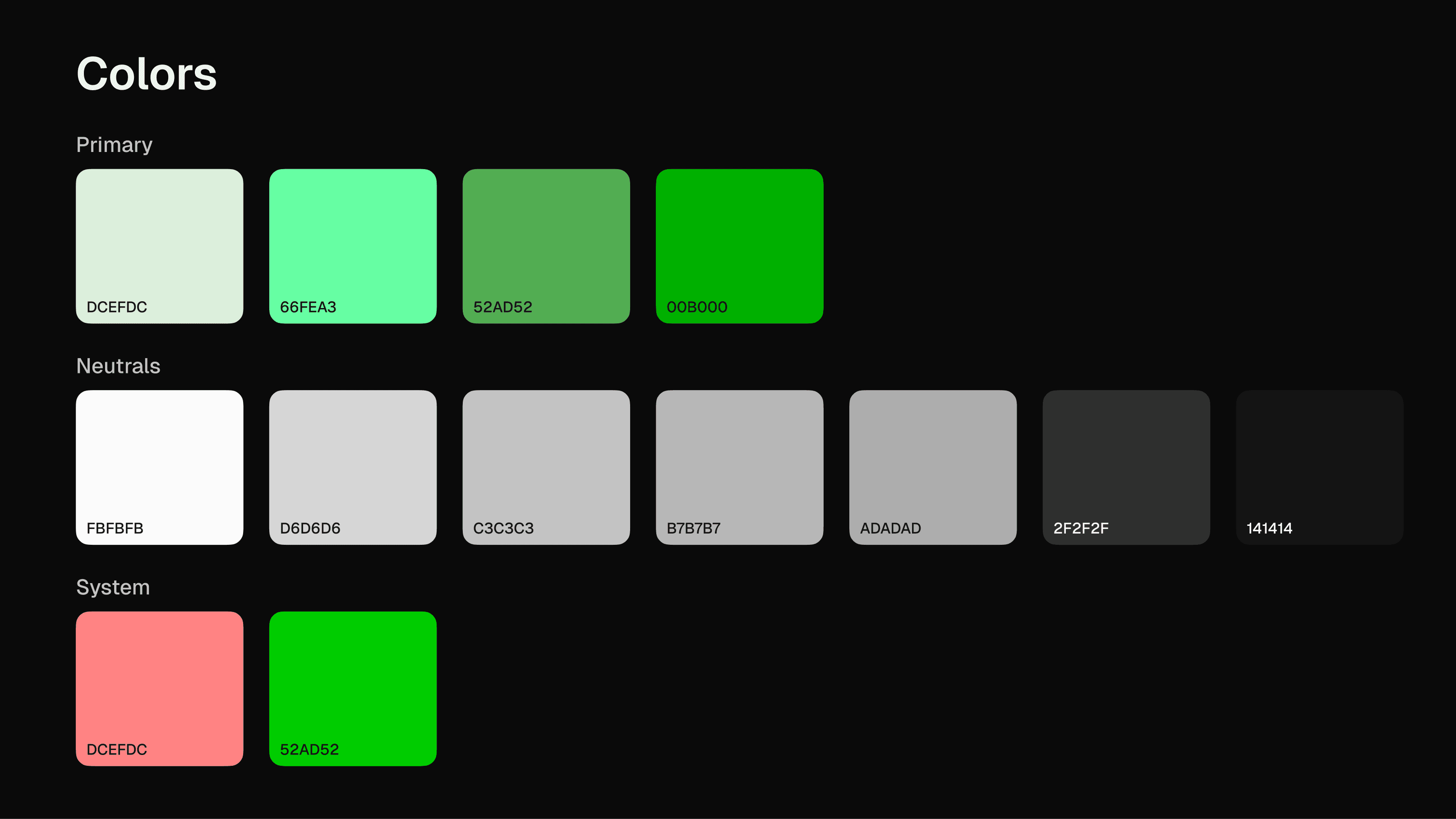
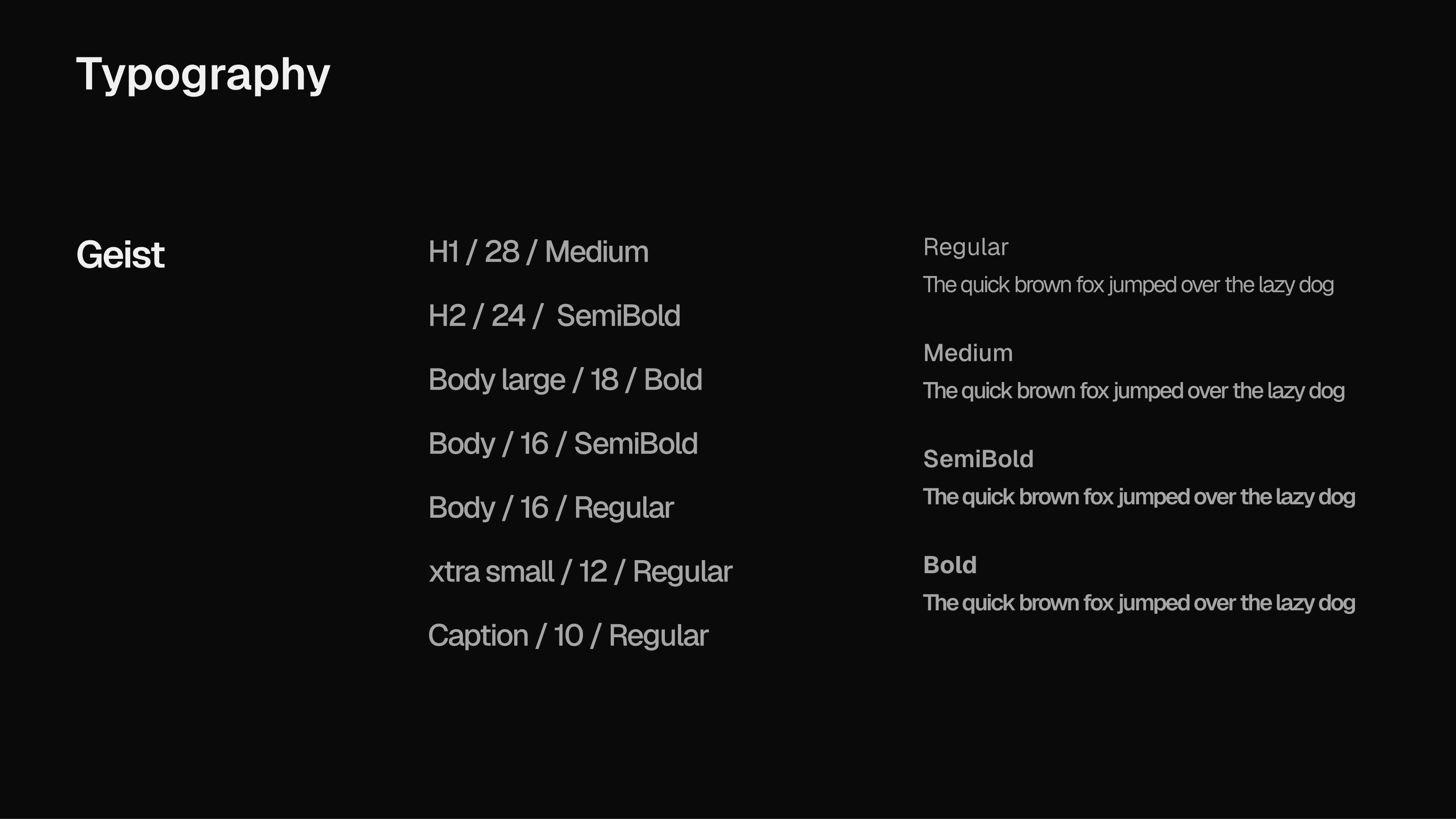
Trust Wallet, MetaMask and Coinbase Wallet all make the same visual assumption. Flat, clinical interfaces with conventional fintech styling. White/Black backgrounds, standard sans-serif type, red error states.
The design language communicates neutrality rather than intention but neutrality just avoids the problem instead of building trust with the opportunity . When a user is handling real money in software they don't fully understand, a neutral interface gives them nothing to hold onto, it doesn't signal that the people behind the product took it seriously, everything just looks like every other fintech product from the last five years.
The gap in the market was a feeling, no existing wallet was designed to feel considered, physically weighted and emotionally calm at the moments that mattered most
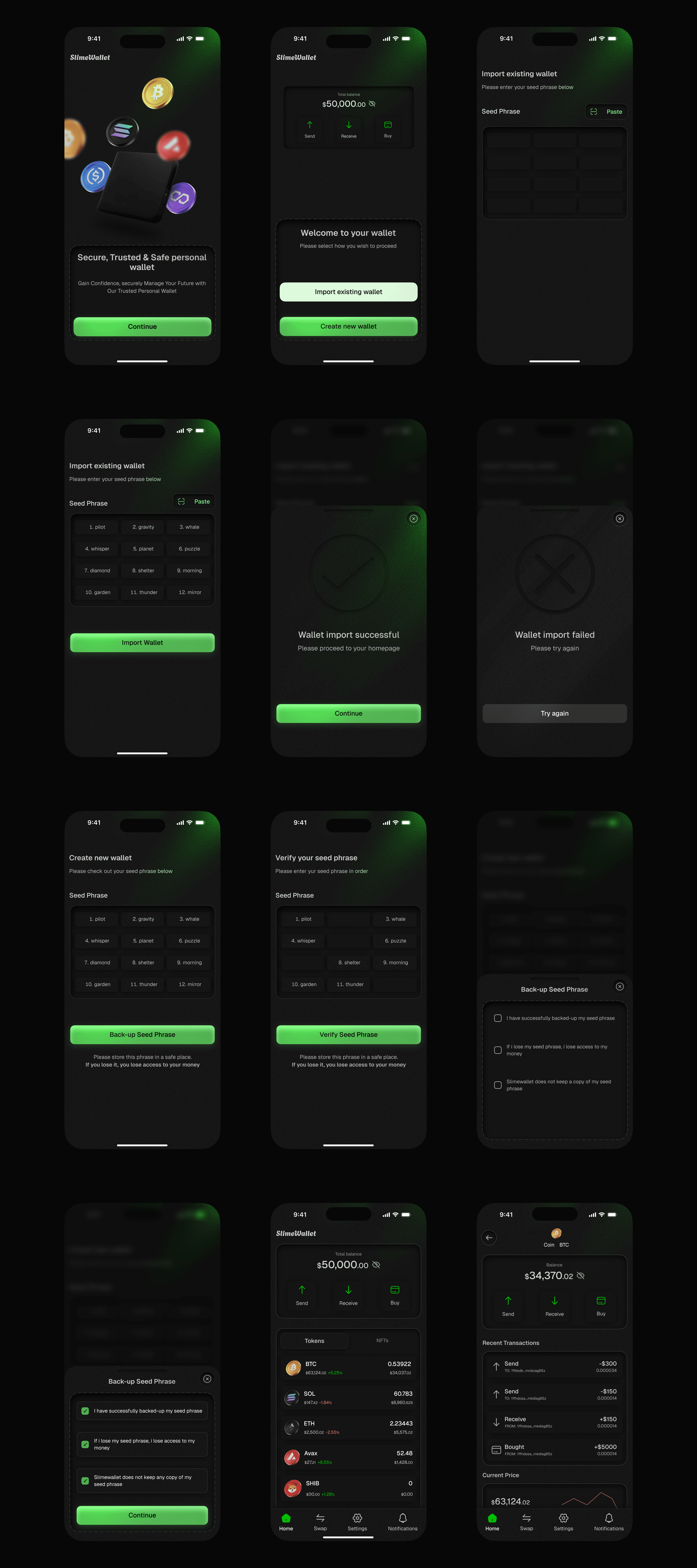
1) Red error states amplify fear at the worst moment so i removed red entirely from all error states and designed a muted, calm, atmosphere that encouraged users to try again across failure states.
2) Seed phrase input feels fragile and frightening so each word slot was designed as a an elevated component so it feels placed and not typed, a deliberate decision not to be fragile
3) Users don't genuinely understand what they're agreeing to during backup so i designed 3 explicit checkboxes to actively engage users, the continue button is withheld until all three are checked.
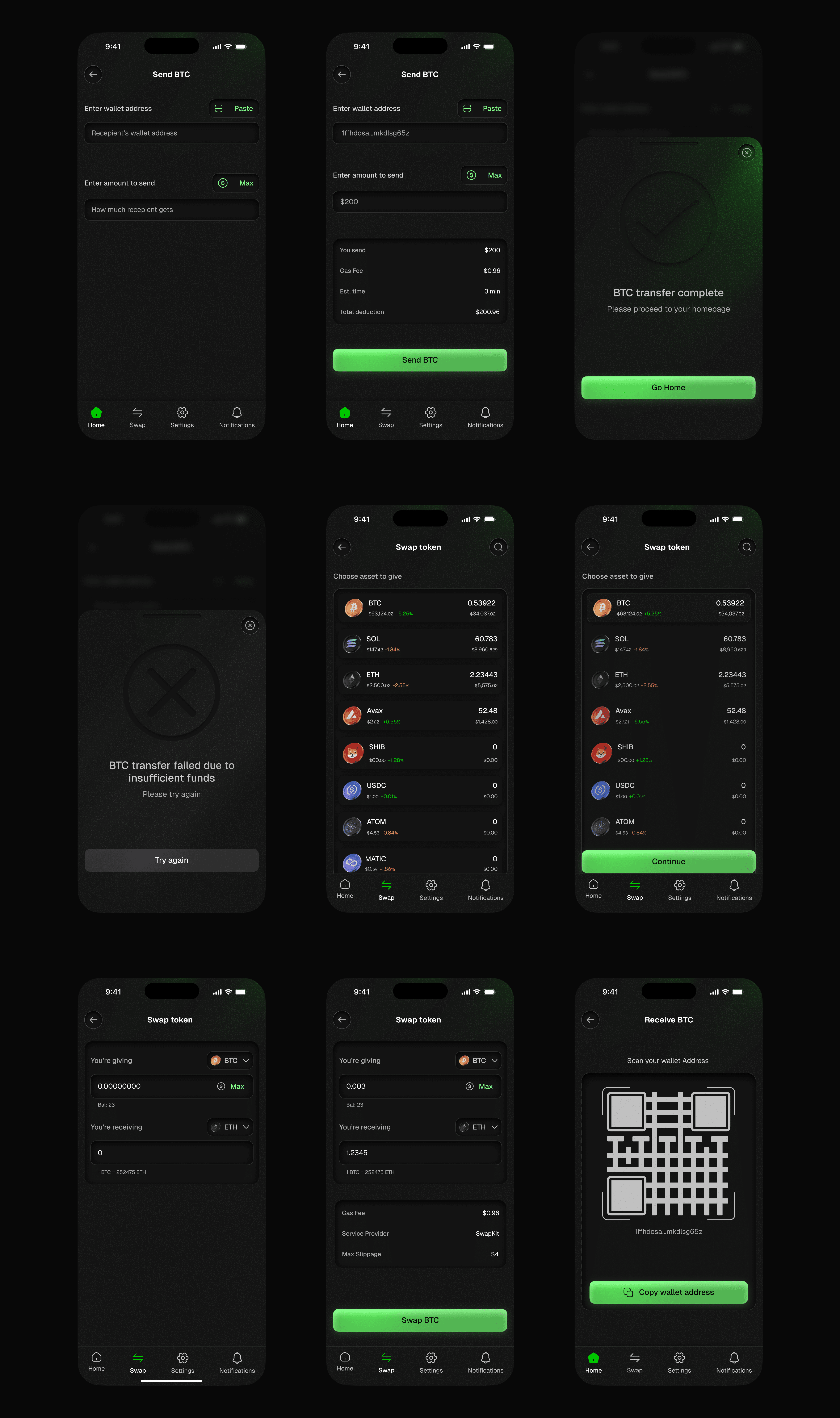
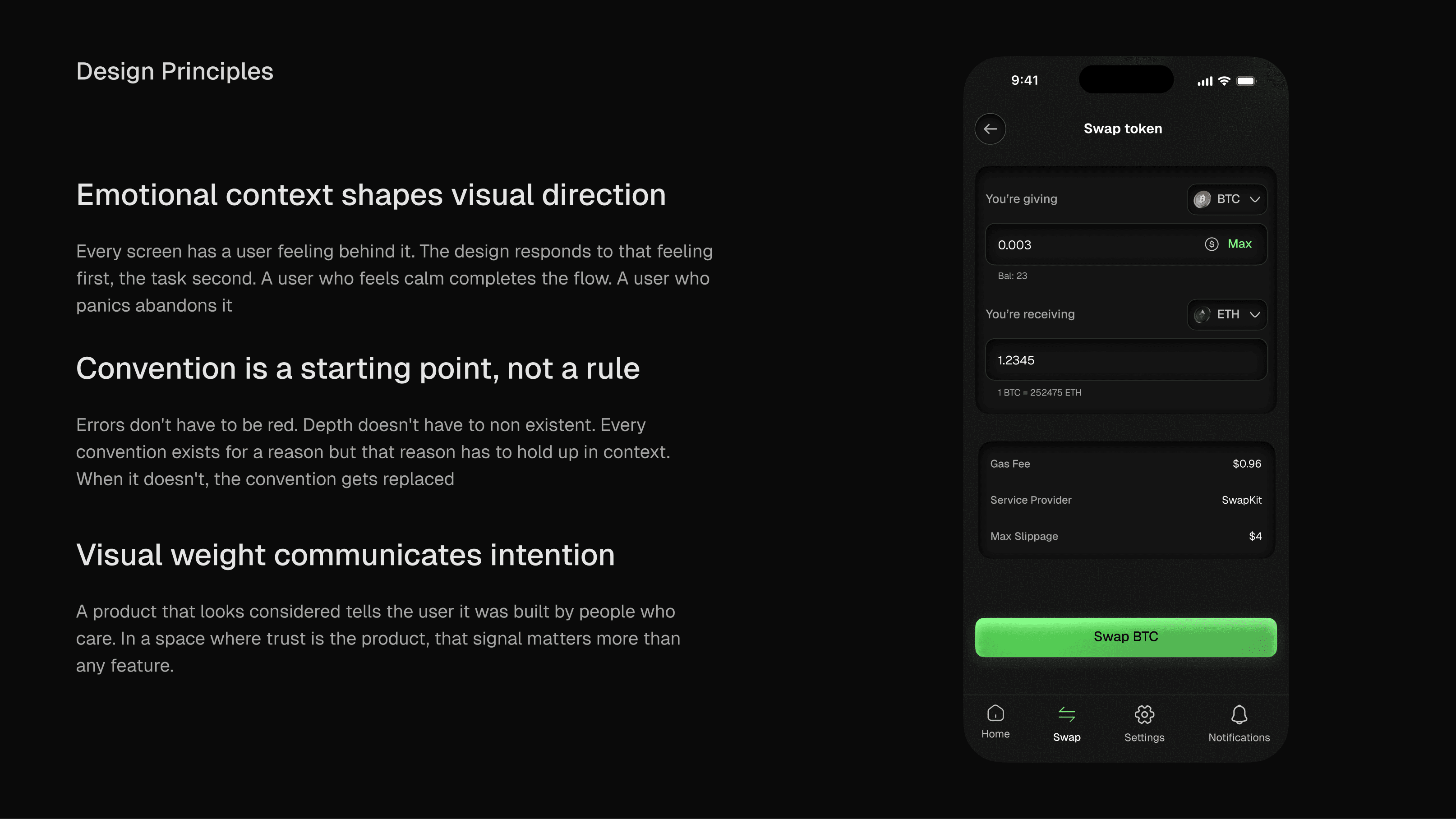
4) Flat clinical interfaces signal indifference so i designed a dark ambient atmosphere, inner shadows, recessed surfaces. Every element has physical weight so the product looks like someone cared about building it

The first version of SlimeWallet followed the default crypto wallet visual language. Dark background, flat surfaces and some glow. It was clean, functional, just like every other wallet in the category.
And that’s the problem, it wasn't wrong, It was was just neutral and neutral doesn't build trust when the user is handing real money to software they don't fully understand.
One question that changed the direction: What does a product look like when the people who built it are trying to build trust?
The answer was visual weight, not more color or more animation.
Giving the token list a contained surface with depth.
Deepening the background atmosphere.
Making every element feel placed rather than floating.
The shift from flat to tactile was a direct response to a trust problem.


The first version of the seed phrase input field was an empty rectangular one. Functionally, it worked and that was why i defaulted to it.
But watching users interact with it, during a usability testing session showed me something that felt off. The blank field communicated nothing about the weight of what was being entered. It felt fragile, like the words could disappear the moment they were typed. The empty state gave no sense that twelve specific slots were waiting to be filled, it just looked like an xl text box.
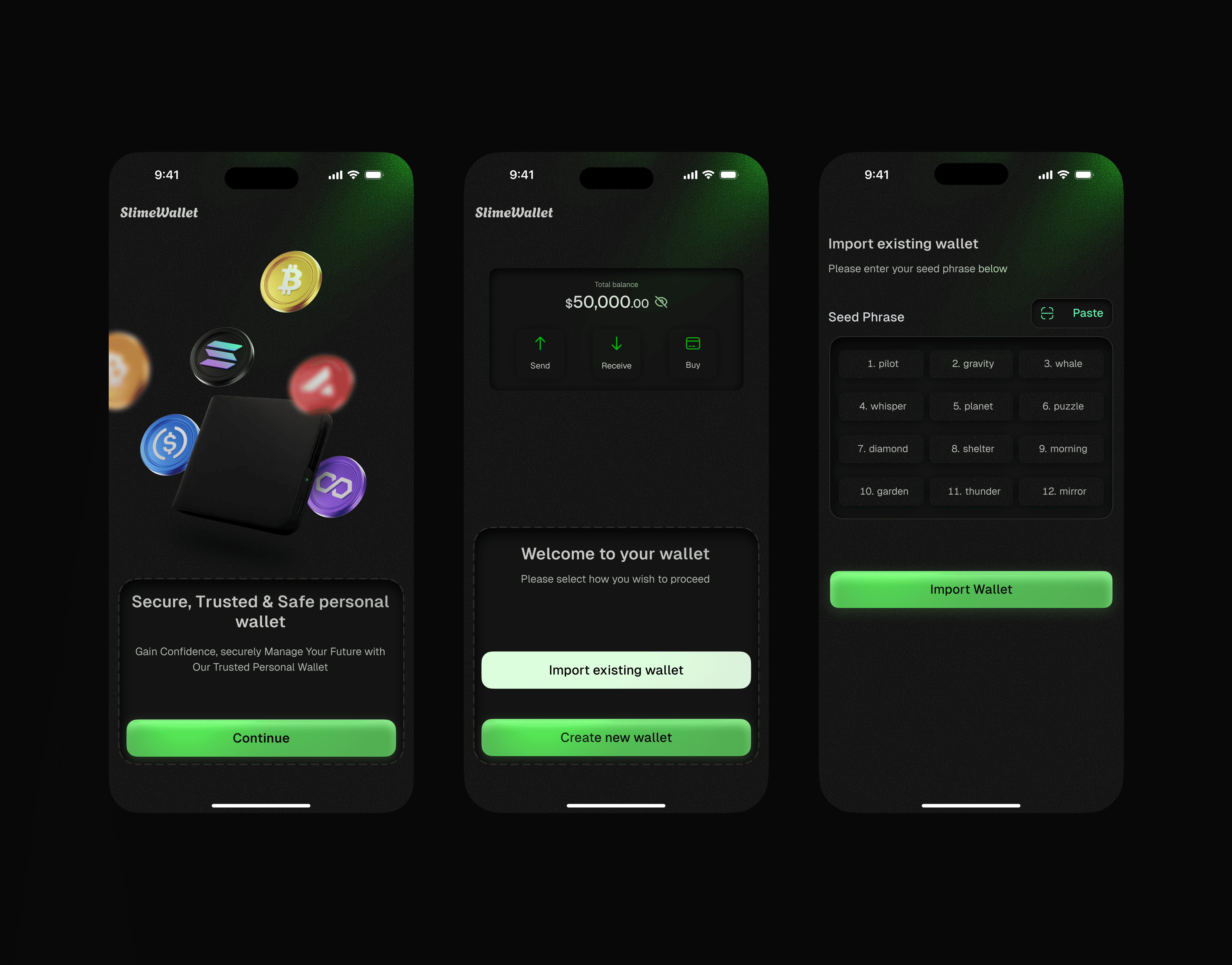
So i shifted direction entirely, instead of one open field, each word gets its own elevated slot, bringing structure to an otherwise empty state. Each slot tells the users exactly what is expected before they start typing and when they’re done, the filled state give each word a grain texture for physical presence.

Every design system says errors are red, red means stop, red means wrong, red means panic.
A user who fails to import their seed phrase is already afraid they've lost access to their money. A red screen confirms that fear before they've had a chance to try again. The emotional response to the design increases the emotional response to the failure.
The decision
The failed state uses the same muted, dark, calm visual language as the rest of the app. No red. No alarm. The screen says: this didn't work, try again without triggering the anxiety spiral that makes users abandon the flow entirely

The seed phrase screen is the highest-anxiety moment in any crypto onboarding flow. The user is handling the one thing that, if lost, means losing everything. Most wallets present a plain text input. The interaction feels fragile, like the words could disappear.
The Decision
Each word slot is an elevated physical component in a recessed field that feels like a button waiting to be pressed. When the word lands, it feels placed, not typed. The tactile direction turns an anxiety-inducing ritual into something that feels deliberate and controlled

Non-custodial wallets carry a real risk: if the user loses their seed phrase, the wallet provider cannot recover their funds. Most apps mention this once in small print. Most users miss it
The Decision
Three explicit checkboxes before the user can proceed, each one a specific statement the user must actively confirm. The Continue button only appears once all three are checked. The user doesn't just read the risk. They acknowledge it, one checkbox at a time.

The decisions in SlimeWallet weren't specific to crypto. They were specific to users who are anxious, uncertain or making consequential choices. That describes users in health, fintech, legal, insurance, anywhere the stakes are real.
I design for what the user is feeling at every step, not just what they're trying to do. The visual direction, the interaction flow, the copy, everything connects back to one question: does this make the user more confident or less?
If that's the kind of problem your product has, I'd like to work on it with you. One short conversation is all I'm asking for