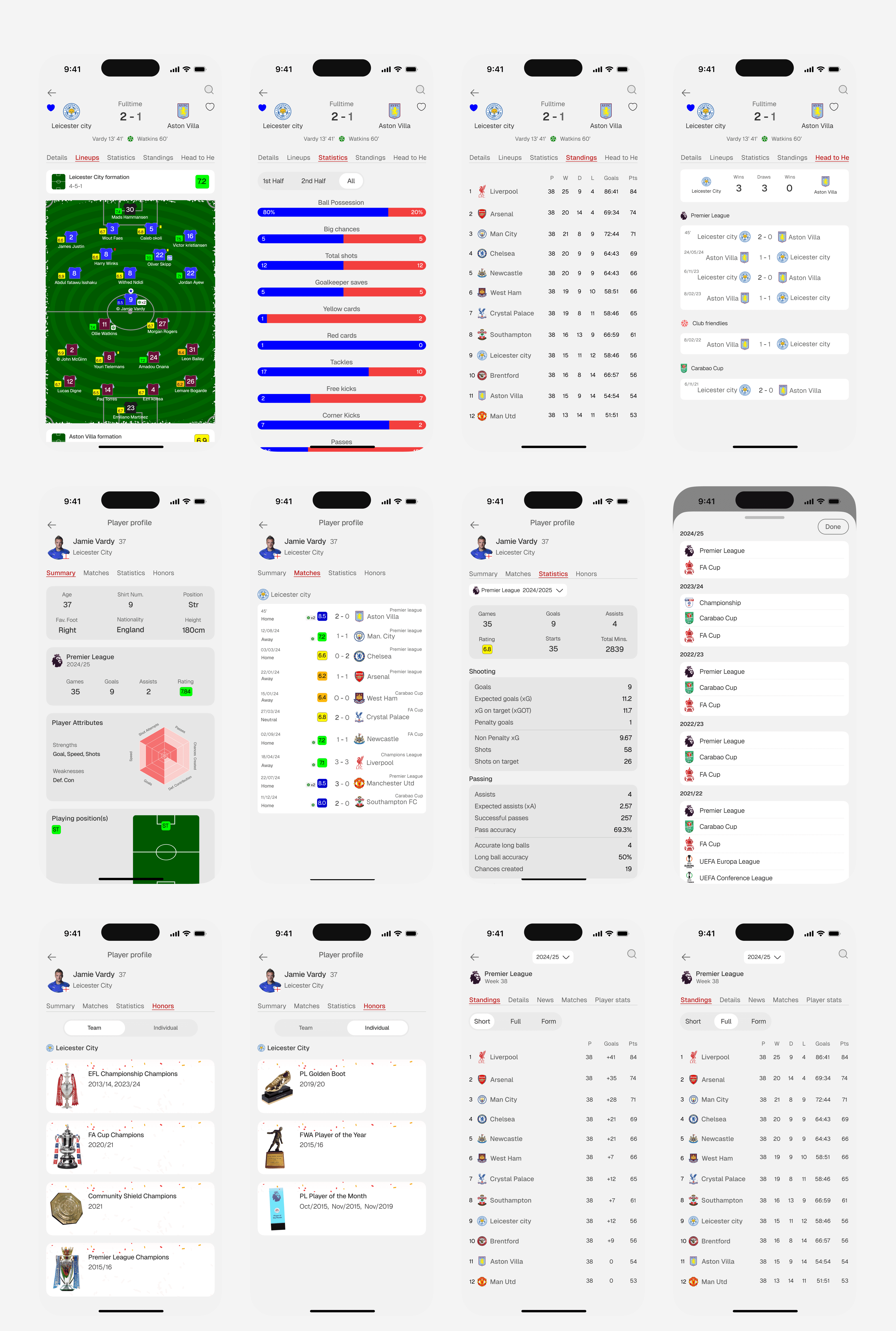
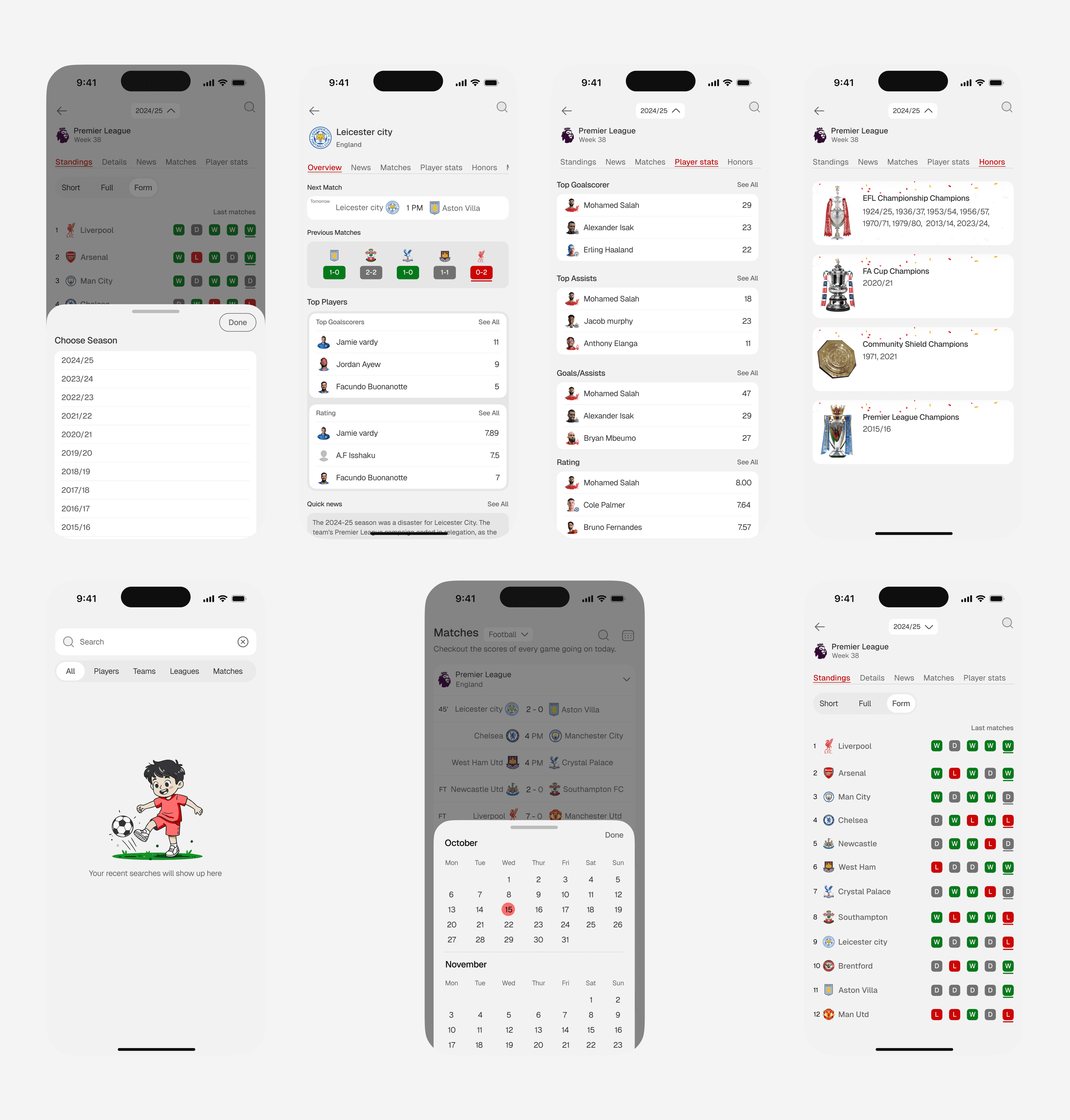
2 User Persona, 1 Screen
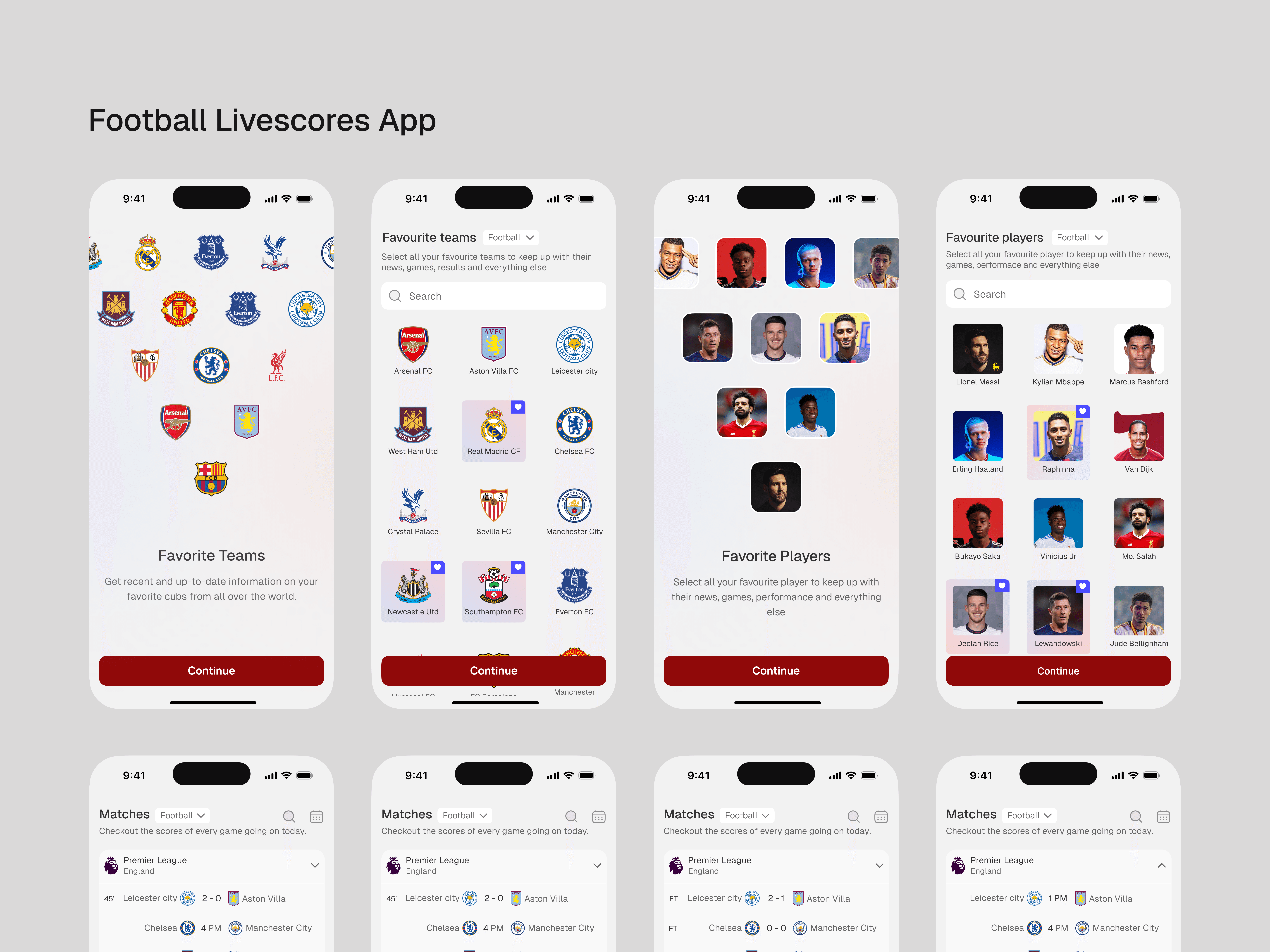
Project Overview
A football live scores app designed around one idea: the same information means something different depending on whether you're watching the match or reading about it after
Industries
Sports
Football
Services
Landing page
Audit
Sports
Football
Year
2025
The Problem
Football data is enormous, phone screen is not. A single match generates: a scoreline, goalscorers, assist makers, bookings, red cards, substitutions, formations, individual player ratings, possession stats, shot maps, pass accuracy, head-to-head history and league standings, all before full time. The challenge isn't getting that data into an app. The challenge is deciding what a fan needs to see, when they need to see it, and how to get them there without making them think. That last part, without making them think, is where most sports apps fail. They surface everything and call it comprehensive. Ball was designed around a different principle: show the fan exactly what they need for where they are in the match, right now.
Research Approach
The research started from two places: personal experience as a direct football fan and daily FotMob user and App Store reviews across FotMob, OneFootball and Sofascore. These reviews helped me find patterns in what fans actually needed from a live scores app depending on when they were using it. Thousands of user reviews were processed across FotMob alone. Three consistent patterns emerged across the data that shaped every design decision in Ball
What Fans Said
Fans using the app during a live match complained about the same things repeatedly, events that were delayed or missing when they mattered most. Red cards that didn't appear until after the game ended. Wrong goalscorer notifications. Match trackers that didn't work. Fans catching up after a match had a different problem. The same feed that served live users was supposed to serve catch-up users too, just flipped in direction. But flipping a feed doesn't change what the user is doing, a fan who is catching up on a match they missed is reading a story they weren't there for
Competitive Landcsape
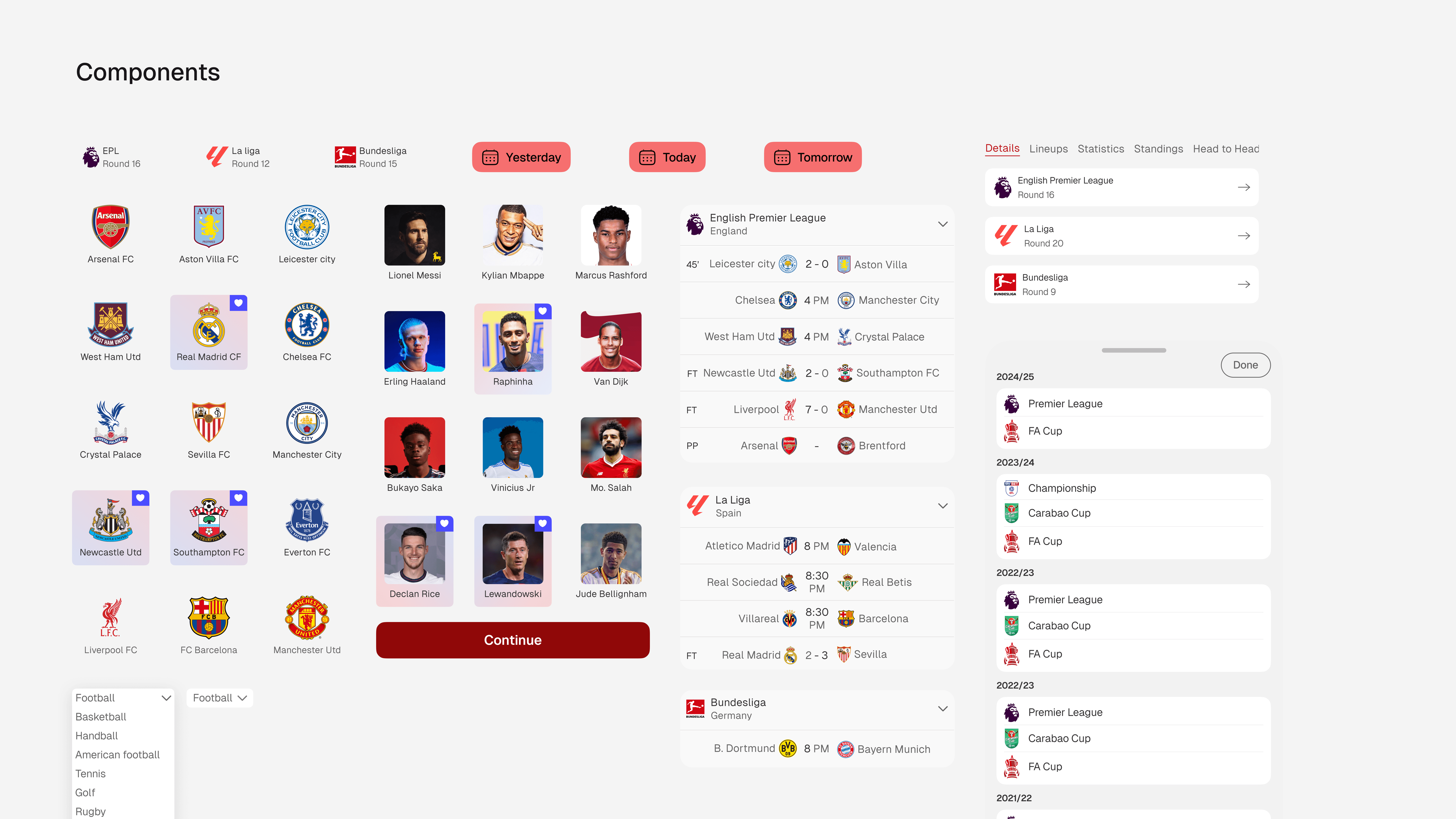
FotMob recognised that live and catch-up are different contexts.
During a live match, the most recent event is top of the feed until the game is over, their solution was to flip the feed when the match ends, the 1st minute event which was bottom of the feed during the match moves to the top and the 90th minute event which was on top of the feed moves to the bottom. The chronology is corrected but the layout isn't. The same left-right team split that serves a live fan scanning for their team's events stays in place for a catch-up fan who is trying to read the narrative.
OneFootball and Sofascore make the same assumption, one layout, one direction change, two users served imperfectly.
The problem goes beyond the order of the event, it goes into the structure of the layout itself.
The core Insight
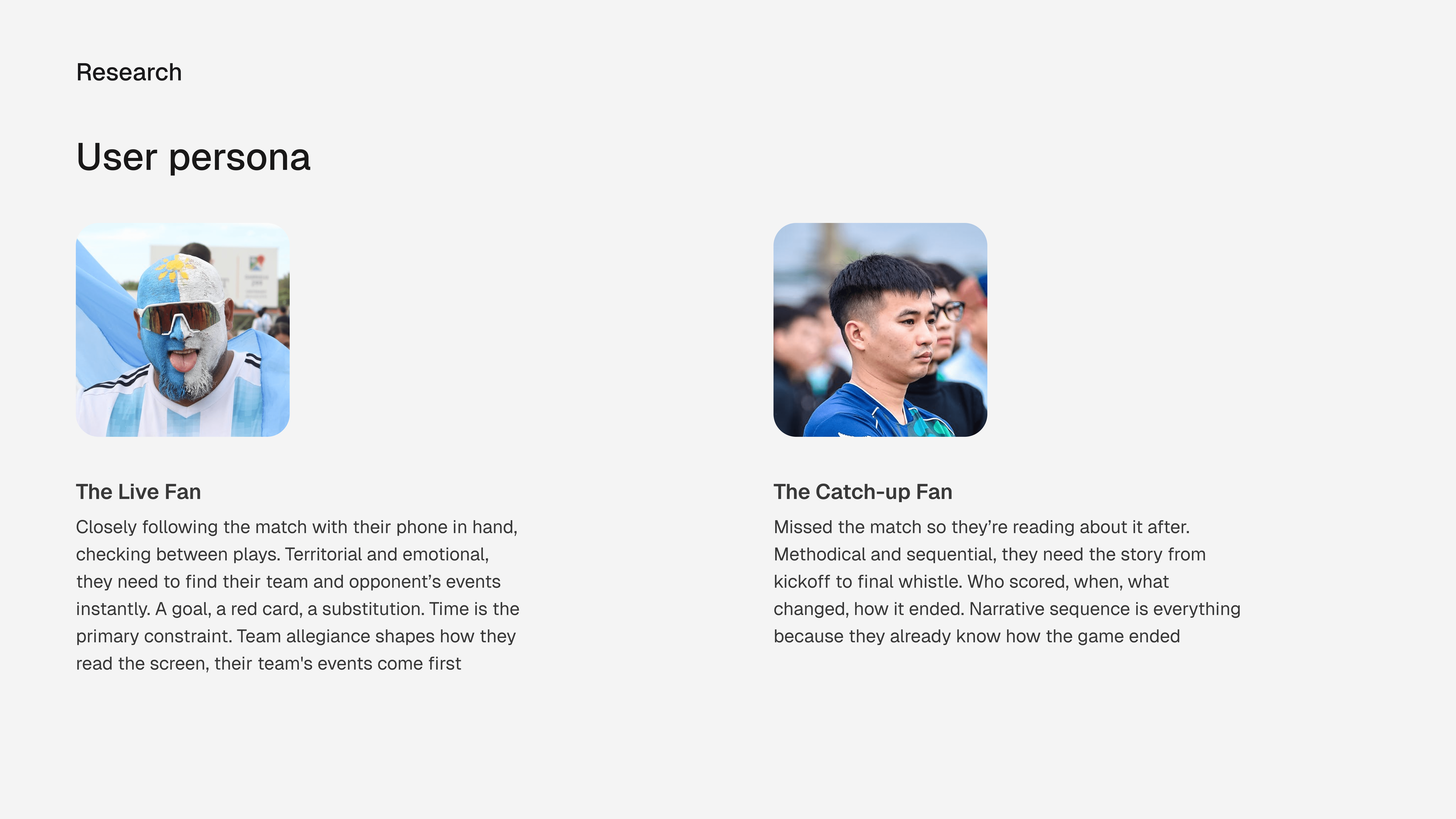
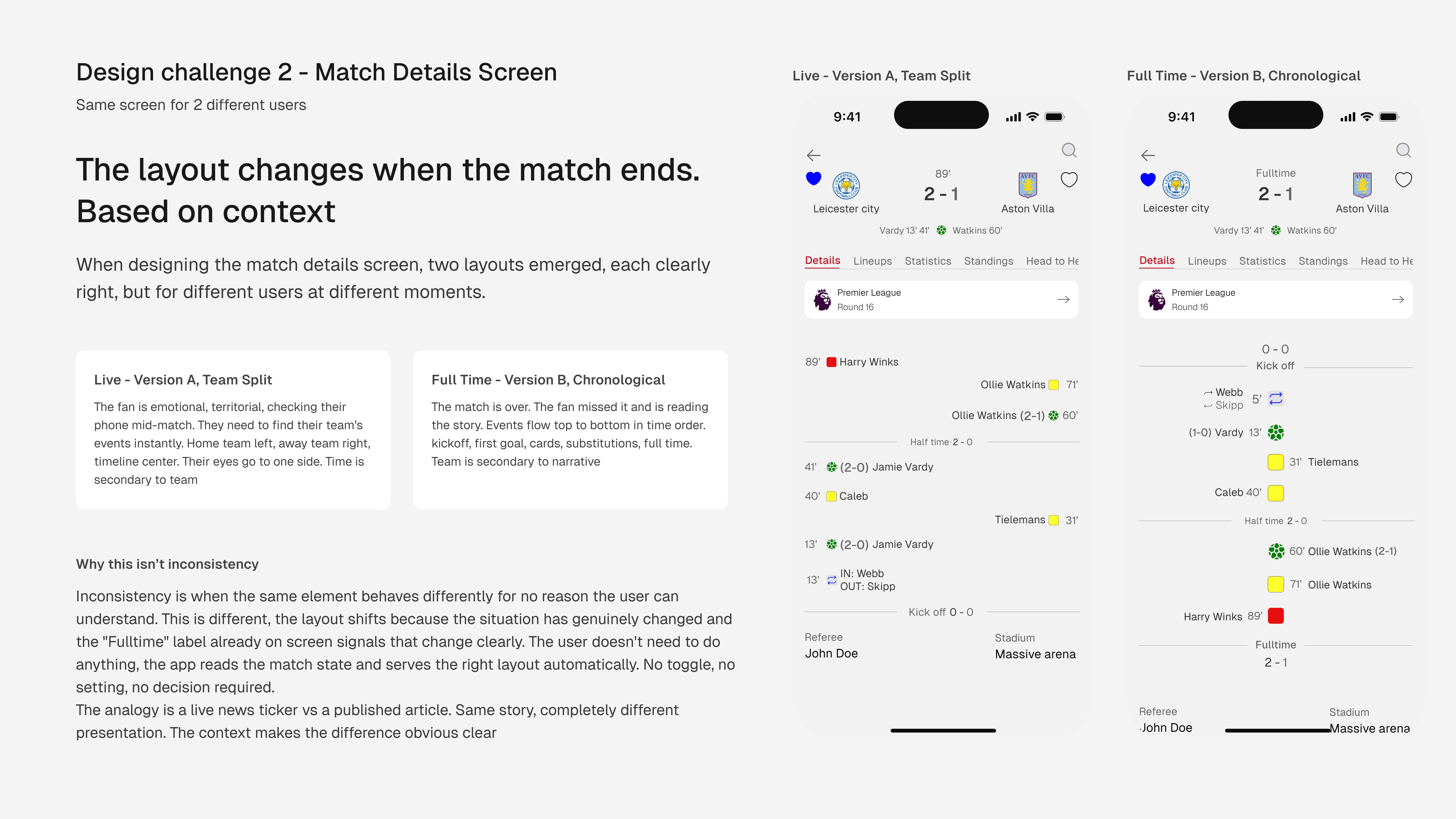
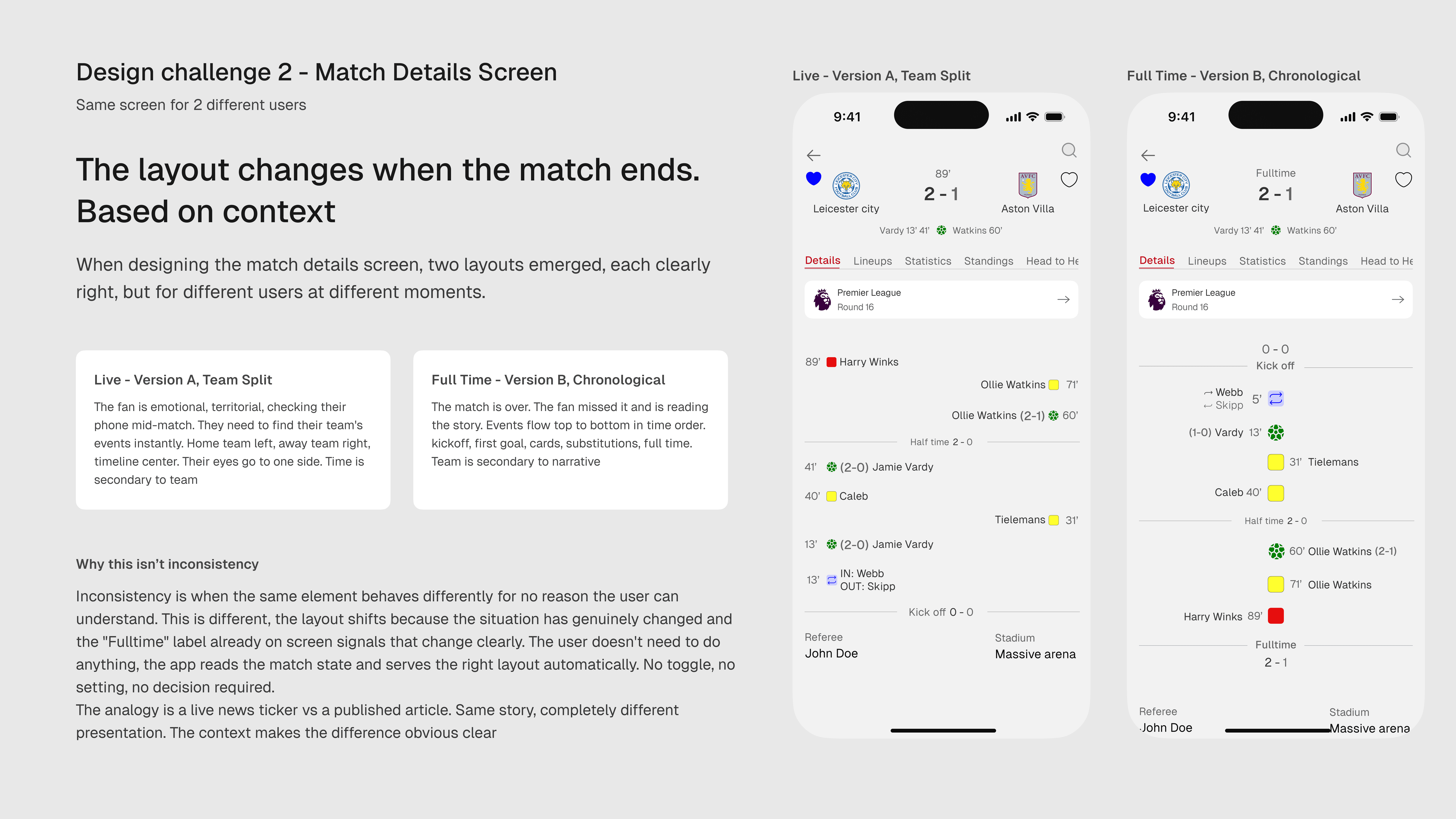
A live fan is territorial and emotional. They're looking for their team's events on their side of the screen. Left-right team split, that structure maps directly to how they're reading the match emotionally.
A catch-up fan is reading a story, the match is over and team allegiance is secondary to the narrative. They need events anchored centrally, tied to their minute, reading top to bottom from kickoff to full time the way narrative is meant to be consumed.
FotMob changed the order. Ball changed the structure.
Three Explorations, One Insight
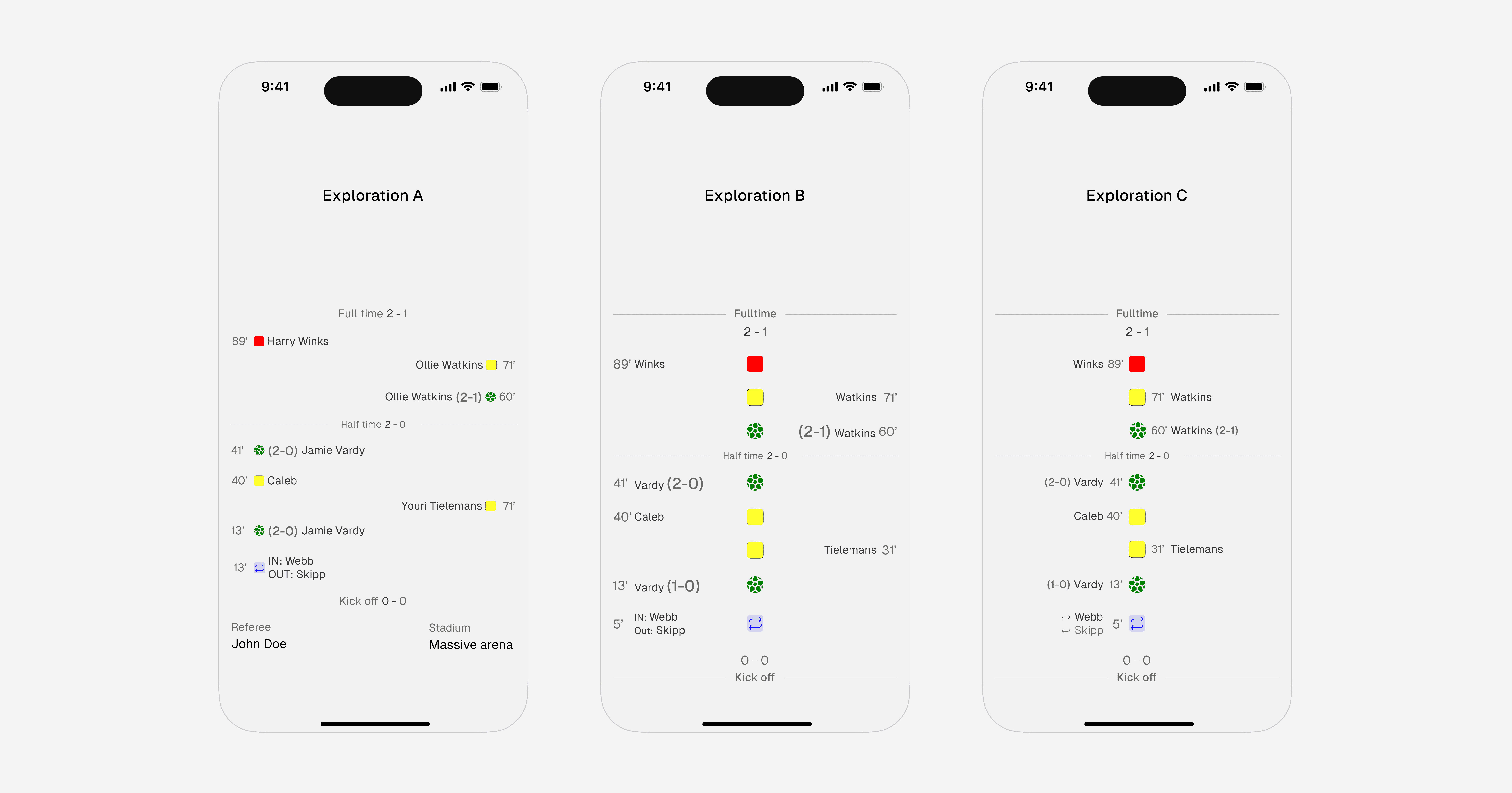
Three layout directions were explored for the match details screen before the final decision was made.
Exploration A anchored time to the left with home events left-aligned and away events right-aligned. The asymmetry made it difficult to scan in one go
Exploration B moved to a central spine with time on the left and icons in the middle. Cleaner, but the reading direction created conflict as the eye couldn't decide whether to follow time or event icons.
Exploration C adjusted the time position to sit right of the event, keeping icons central. The difference from B was minimal and the fundamental problem remained. A single layout was being asked to serve two users with completely different needs.
The insight that came from all three explorations was that the problem was a framing problem. Every exploration assumed one layout had to work for both the live fan and the catch-up fan but none of them could, because those two users aren't doing the same thing.
The final solution abandoned the hybrid. Live match gets a true team-split layout. Full time gets a centrally anchored chronological feed. The match state triggers the switch automatically. No toggle, no setting, no decision required from the user.
The core Insight
A live fan is territorial and emotional. They're looking for their team's events on their side of the screen. Left-right team split, that structure maps directly to how they're reading the match emotionally.
A catch-up fan is reading a story, the match is over and team allegiance is secondary to the narrative. They need events anchored centrally, tied to their minute, reading top to bottom from kickoff to full time the way narrative is meant to be consumed.
FotMob changed the order. Ball changed the structure.
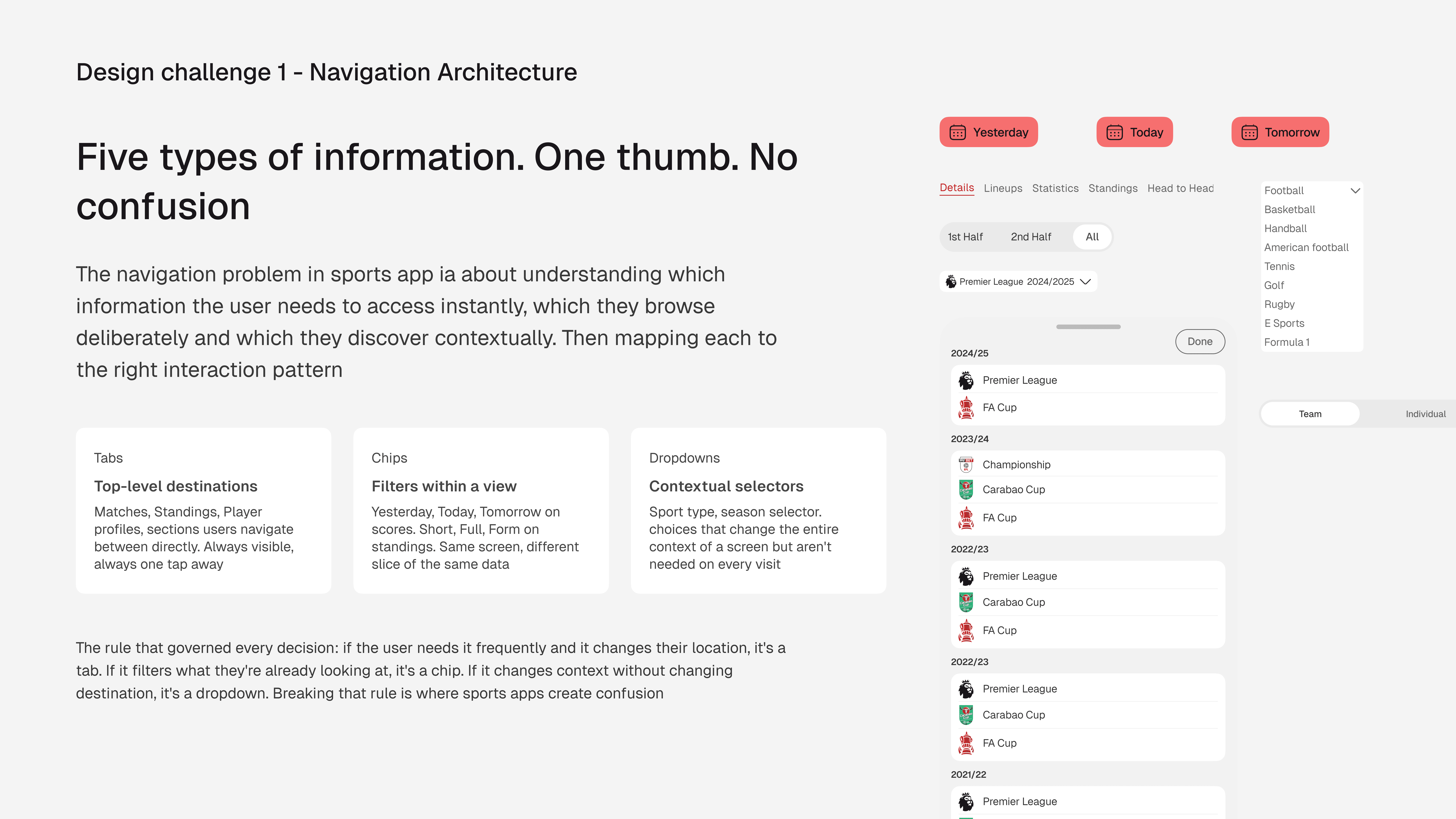
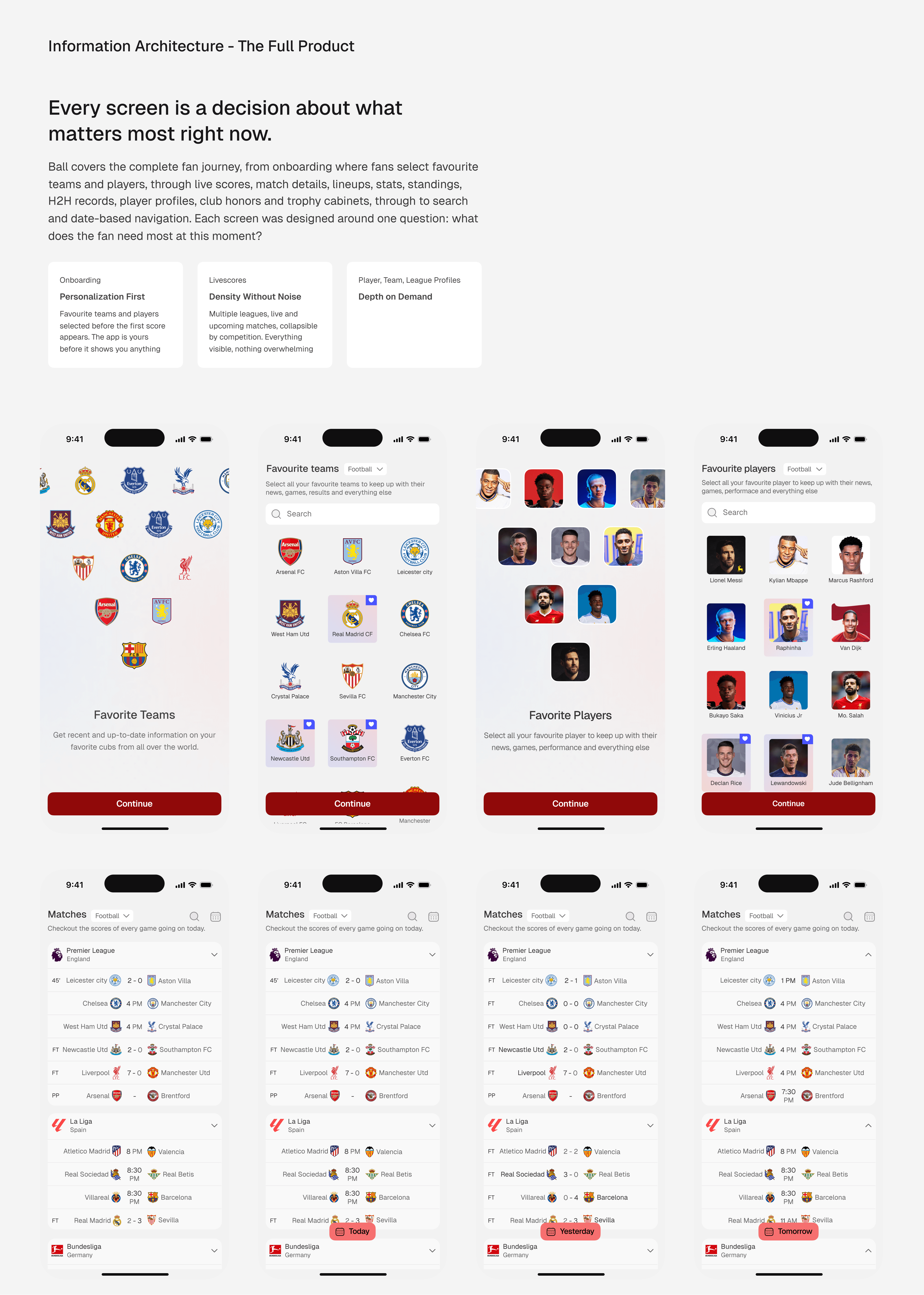
Any product that surfaces time-sensitive information has the same two users. The one consuming it live urgently. And the one catching up methodically, sequentially, retrospectively. News platforms, financial dashboards, live event apps, logistics trackers. They all have a version of this problem.
Most products pick one user and call it a design direction. The more honest approach is to let the product read the context and serve both users automatically, without making the user do the work of deciding how they want to engage.
If your product has information that changes meaning depending on when it's consumed, I'd like to work on that problem with you. One short conversation is all I'm asking for.